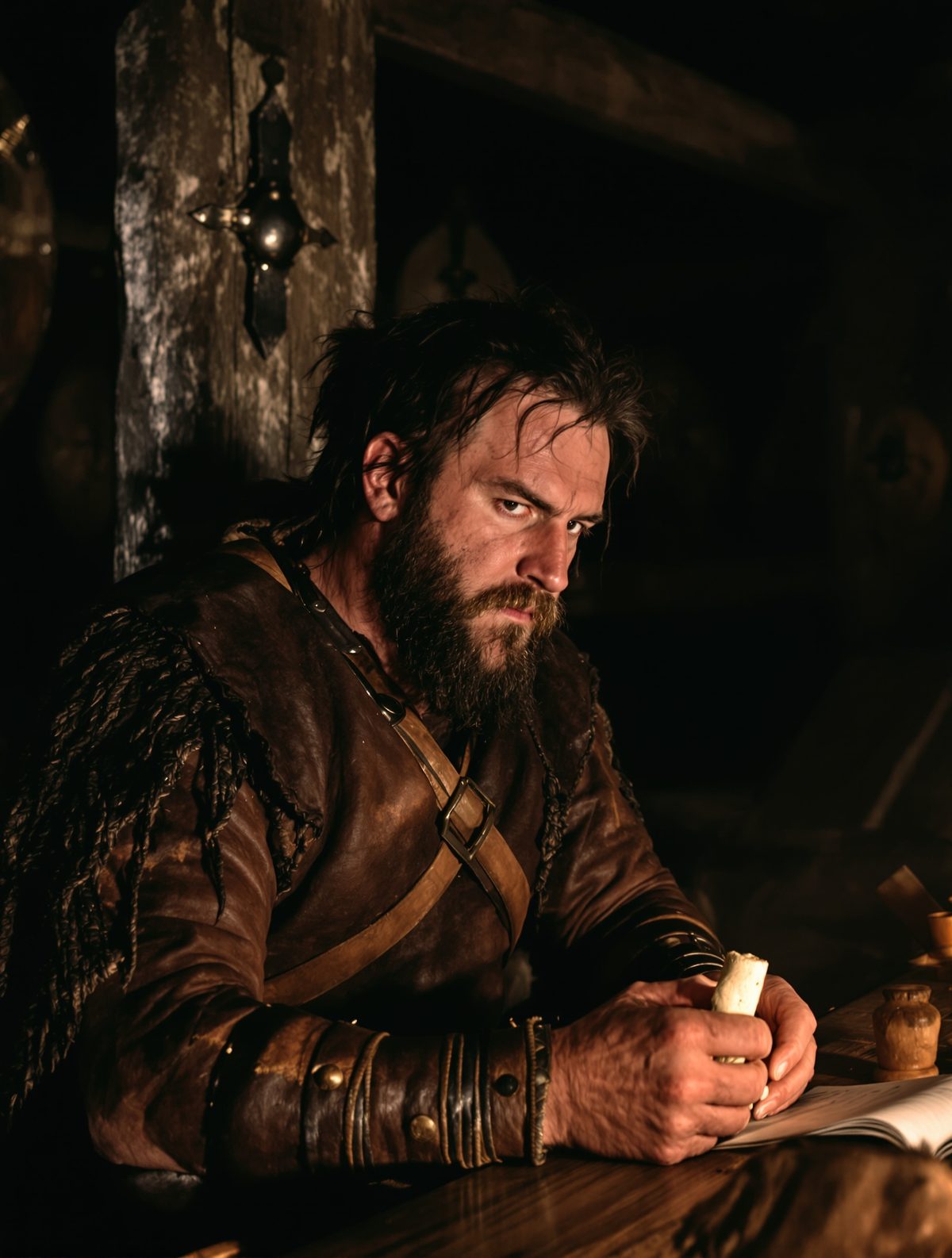
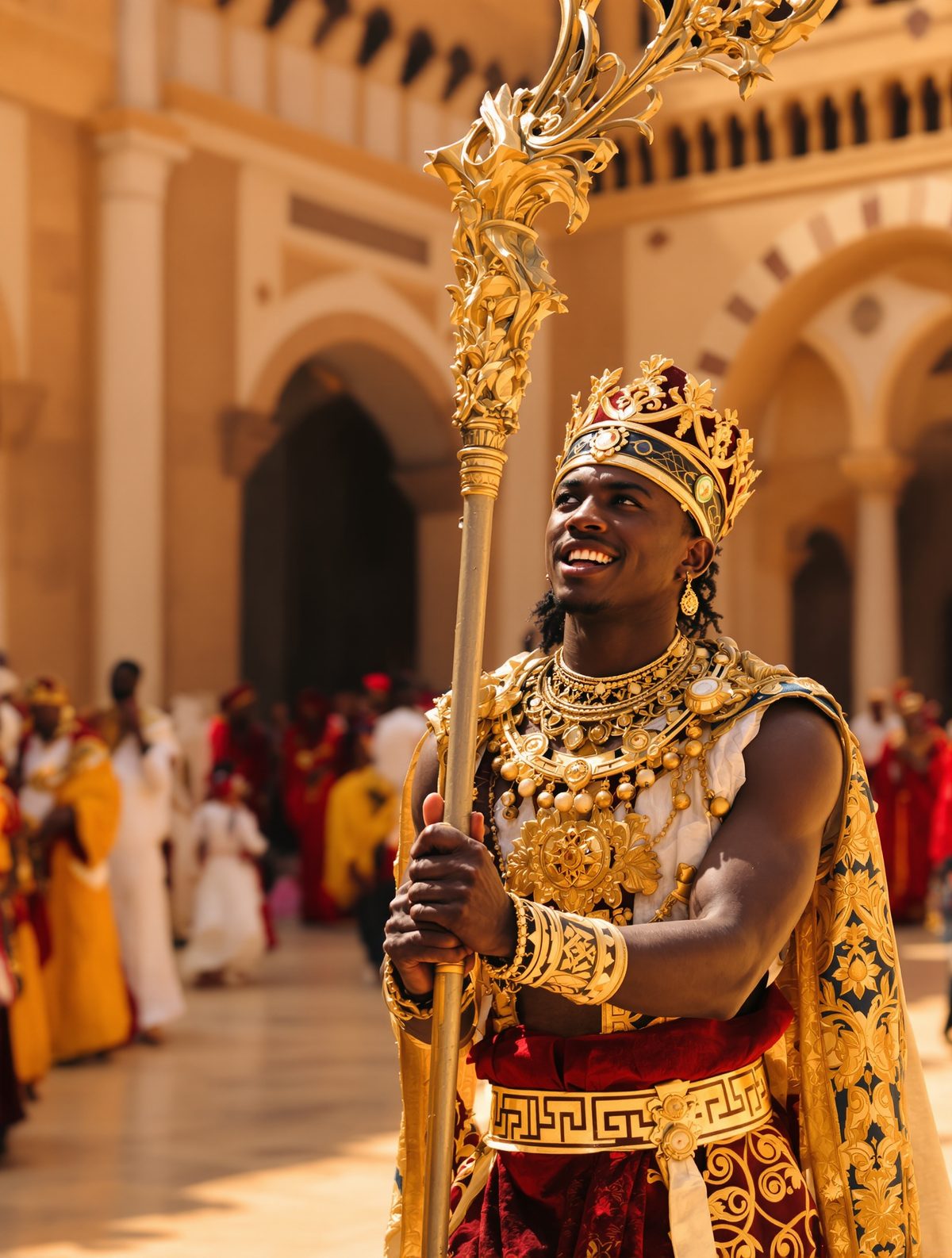
Picture this: a young prince dragging himself across the dusty ground on his hands and knees, his useless legs trailing behind him as his enemies laugh and jeer. They call him "the crawling prince" and mock his weakness. But when that same prince reaches for an iron bar planted in the earth—a symbol of divine kingship—something miraculous happens. For the first time in his seven years of life, Sundiata Keita rises to his feet. That moment in 1235 AD didn't just mark the beginning of a reign; it launched one of Africa's greatest empires, stretching from the Atlantic coast to the bend of the Niger River.
This is the story they never taught you about the Mali Empire—how a disabled child became the Lion King of West Africa and built a civilization so wealthy that his successor's pilgrimage to Mecca crashed the gold market for a decade.
The Prophecy of the Buffalo Woman
Long before Sundiata's dramatic rise, his birth was foretold by a mysterious woman known as the Buffalo of Do. According to the Sundiata Epic—one of Africa's greatest oral histories passed down through generations of griots (traditional storytellers)—this woman appeared to King Naré Maghann Konaté of the small kingdom of Kangaba around 1217 AD. She was hideously ugly, with a hunched back and wild hair, but she possessed powerful magic.
The Buffalo Woman told the king that if he married her, she would bear him a son destined for greatness—a child who would unite all the lands under one rule. But there was a catch: this future emperor would face tremendous hardship in his youth. Maghann, intrigued by the prophecy and perhaps sensing the woman's otherworldly power, agreed to the union.
When Sundiata was born, he appeared perfectly normal. But as months passed into years, the child showed no signs of walking. His legs remained weak and underdeveloped, forcing him to crawl everywhere while other children ran and played. The court whispered that this crawling boy could never be the great ruler the Buffalo Woman had promised. Even his name seemed like cruel irony—"Sundiata" means "hungering lion" in Mandinka, yet here was a prince who couldn't even stand on his own four limbs, let alone hunt like the king of beasts.
The Exile of the Crawling Prince
When King Maghann died in 1224, the succession crisis that followed would make Game of Thrones look tame. According to tradition, Sundiata should have inherited the throne, but his physical condition made him appear weak and unfit to rule. His half-brother Dankaran Touman, born to one of the king's other wives, seized power instead.
But the real threat came from outside Kangaba's borders. Sumanguru, the fearsome king of the Sosso people, had been systematically conquering the small kingdoms of the Ghana Empire's former territory. This wasn't just political expansion—Sumanguru was said to practice dark magic and had a reputation for particular cruelty. He wore human skin as clothing and was rumored to be invulnerable to weapons, protected by powerful charms and amulets.
When Sumanguru's armies approached Kangaba, Dankaran Touman made a decision that would change history: rather than risk a battle, he chose to submit to Sosso rule. But Sumanguru, having heard whispers of the prophecy surrounding Sundiata, demanded that the crawling prince be killed to prevent any future challenges to his authority.
Faced with this ultimatum, Dankaran Touman took a coward's path. He told Sumanguru that Sundiata was already as good as dead—what threat could a crippled boy pose? But privately, he arranged for Sundiata, his mother Sogolon, and his siblings to flee into exile. In 1225, the future emperor of Mali became a refugee, crawling from village to village across West Africa.
The Iron Bar and the Miracle of Standing
For nearly a decade, Sundiata lived in exile, moving between the courts of various kings who offered sanctuary to the displaced royal family. During these wandering years, he developed not just physical strength in his arms and upper body, but also crucial political skills. He learned diplomacy, observed different styles of leadership, and most importantly, began building a network of allies who would prove essential to his eventual return.
Meanwhile, back in Mali territory, Sumanguru's rule grew increasingly oppressive. He imposed crushing taxes, enslaved entire populations, and systematically destroyed the traditional religious and social structures that held communities together. The breaking point came when Sumanguru killed eleven of Sundiata's brothers in a single massacre, leaving only the exiled prince as the legitimate heir to Kangaba's throne.
By 1235, various Mandinka chiefs had secretly begun sending messages to Sundiata, begging him to return and lead a rebellion against Sumanguru. But how could a man who had never walked lead warriors into battle? The answer came in the most dramatic fashion imaginable.
When Sundiata finally returned to claim his birthright, he faced not just political opposition but outright mockery. Picture the scene: rival chiefs and skeptical warriors gathered to witness the coronation of this would-be king who arrived crawling on his hands and knees. Some laughed openly. Others whispered that the bloodline had clearly been cursed.
At the center of the ceremony stood an iron bar planted deep in the earth—a sacred symbol of kingship that tradition required the new ruler to grasp. As Sundiata dragged himself toward it, the jeering grew louder. But when his hands closed around that iron rod, something extraordinary happened. Summoning strength from somewhere deep within—whether divine intervention, years of building upper body power, or pure force of will—Sundiata pulled himself upright for the first time in his life.
The crowd fell silent. The crawling prince had become the standing king.
The Lion Roars: Building an Empire
Standing for the first time was just the beginning. Sundiata still had to defeat Sumanguru and his powerful Sosso army, a task that would require not just personal courage but brilliant military strategy. The showdown came at the Battle of Kirina in 1235, a confrontation that would determine the fate of West Africa for centuries to come.
Sumanguru brought superior numbers and his reputation for invincibility. But Sundiata had something more valuable: he understood his enemy's weaknesses. Through careful intelligence gathering, he learned that for all of Sumanguru's magical protections, the Sosso king had one vulnerability—he was deathly afraid of white roosters, which his shamans had told him could break his protective spells.
At the climactic moment of battle, Sundiata's forces fired arrows tipped with white rooster spurs at Sumanguru. Whether through psychological warfare or actual magic, the strategy worked. Sumanguru fled the battlefield, his army collapsed, and the formerly crawling prince had won his first great victory.
But Sundiata's genius lay not just in military conquest but in political organization. Rather than simply replacing Sumanguru's tyranny with his own, he created something revolutionary: a confederation that respected local traditions while providing central coordination. The Mali Empire he founded would eventually control territory larger than Western Europe, encompassing parts of what are now Mali, Senegal, Mauritania, Guinea, Gambia, Guinea-Bissau, Niger, and Burkina Faso.
The empire's wealth came primarily from controlling the gold and salt trade routes across the Sahara. Mali sat perfectly positioned between the gold mines of Bambuk and Bure to the south and the salt deposits of Taghaza to the north. Every caravan passing through paid taxes to Mali's treasury, creating wealth that would make the empire legendary across the known world.
Legacy of the Lion King
Sundiata ruled Mali until his death around 1255, transforming a collection of small kingdoms into one of medieval Africa's great powers. His empire would endure for more than 400 years, reaching its peak under his grand-nephew Mansa Musa, whose 1324 pilgrimage to Mecca was so lavishly funded that he gave away so much gold in Cairo that the precious metal's value didn't recover for a decade.
But perhaps Sundiata's greatest legacy wasn't material wealth—it was the Manden Charter, a constitution he established that included revolutionary concepts like women's rights, the abolition of slavery by capture, and protection for refugees. These principles, preserved in the oral traditions of West African griots, represent one of history's earliest bills of rights, predating the Magna Carta by two decades.
Today, as we grapple with questions about leadership, resilience, and overcoming adversity, Sundiata's story resonates with unexpected power. Here was a man who society wrote off before he could even walk, who turned his greatest weakness into his greatest strength. His physical struggle taught him empathy for the oppressed, his years in exile gave him diplomatic skills, and his experience of being underestimated became a powerful strategic advantage.
The next time someone tells you that African history lacks great stories, remember the crawling prince who grabbed an iron bar and stood up to claim an empire. Sometimes the most powerful moment in a leader's life isn't when they're at their strongest—it's when they find the courage to rise from their knees.