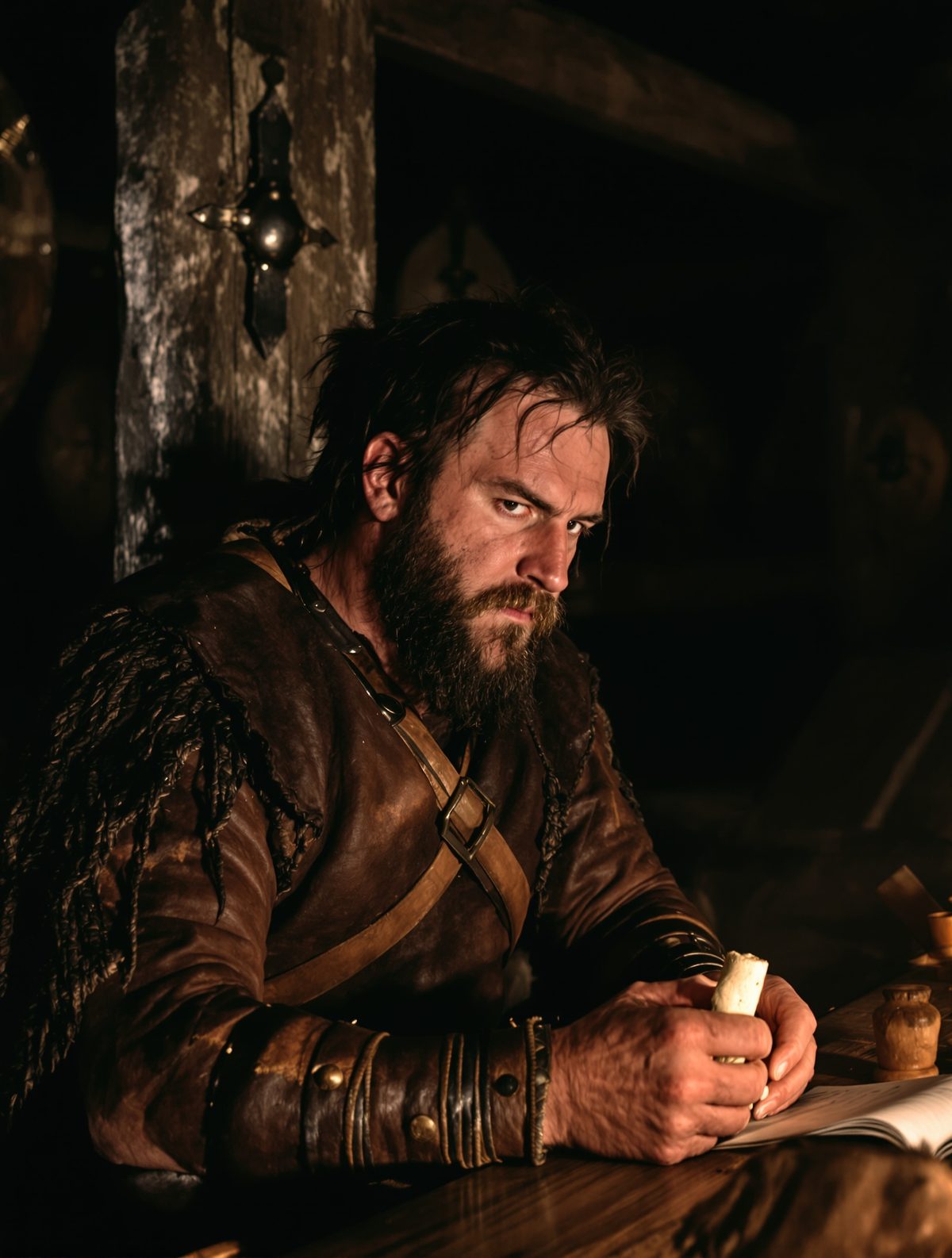
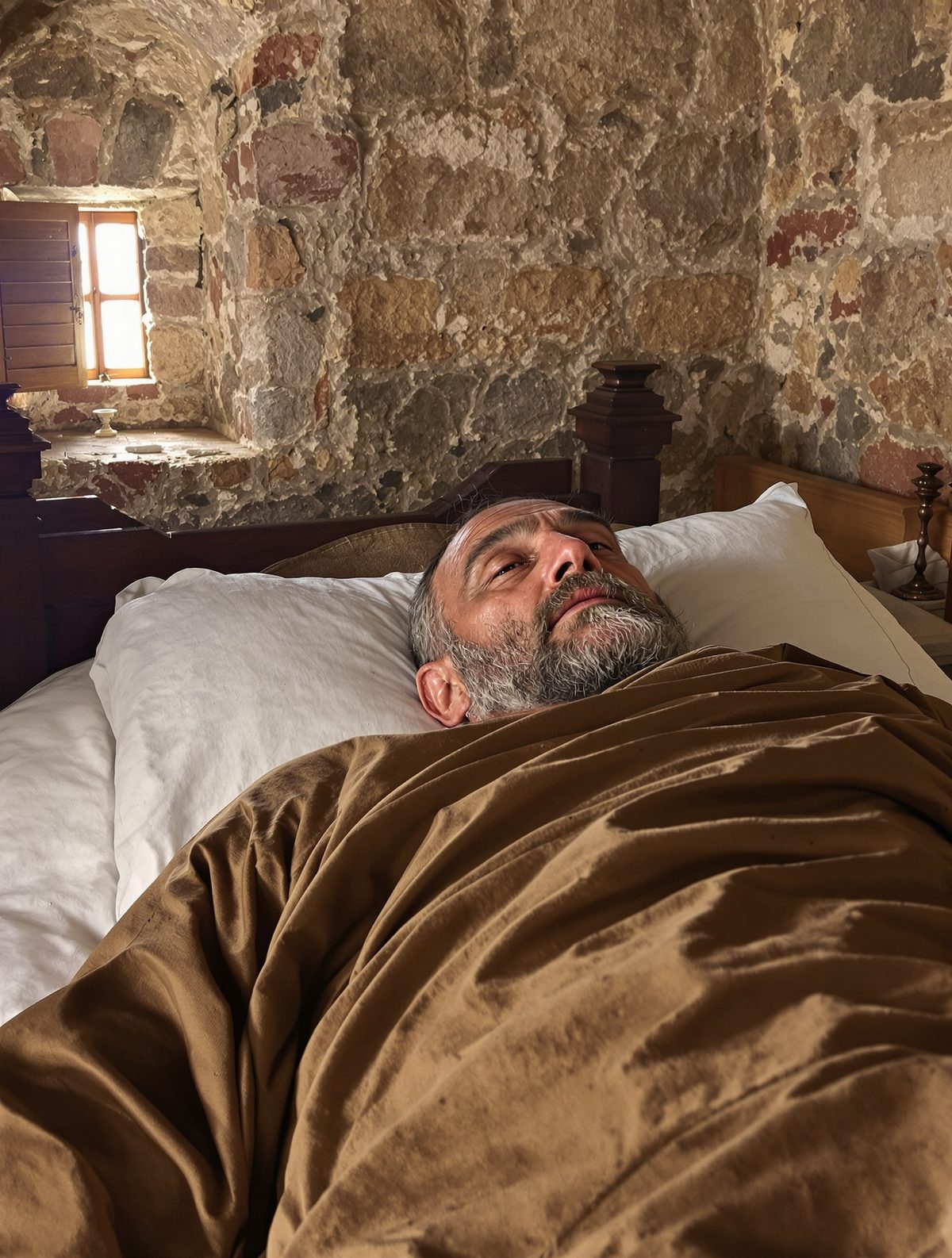
The flickering candlelight cast dancing shadows across the weathered face of Venice's most controversial citizen. It was January 1324, and Marco Polo lay dying in his palatial home overlooking the Grand Canal. Around his bedside, friends and clergy gathered with a final, desperate plea: "Marco, you're about to meet your maker. Surely now you'll admit the truth about those fantastical tales from the East?"
The 69-year-old explorer, his voice barely above a whisper, summoned his remaining strength for one last defiant declaration: "I have not told half of what I saw."
With those words, Marco Polo took his final breath, carrying with him secrets that would haunt Venice for centuries. The man they mockingly called "Il Milione" – the teller of a million lies – had refused to recant even with eternity beckoning.
The Merchant's Son Who Vanished Into Legend
Venice in 1271 was already the beating heart of Mediterranean trade, but 17-year-old Marco Polo was about to embark on a journey that would dwarf every merchant's wildest dreams. When his father Niccolò and uncle Maffeo announced they were returning to the court of Kublai Khan – yes, returning, as they'd already made one extraordinary trip – young Marco begged to join them.
The trio departed Venice in 1271, carrying papal letters and holy oil from Christ's tomb as gifts for the Mongol emperor. They had no idea they wouldn't see the spires of San Marco again for 24 years. To put this in perspective, imagine leaving home as a teenager and not returning until you're middle-aged, having lived through the rise and fall of entire civilizations.
The journey itself was a marvel of medieval endurance. Traveling along what we now call the Silk Road, they crossed treacherous mountain passes where, as Marco later wrote, "fire does not burn as brightly as usual, nor does it give out so much heat." He was describing the effects of high altitude – something completely unknown to medieval Europeans. They survived bandits, sandstorms, and diseases that had no names in any European language.
The Court of the Great Khan: Where East Met West
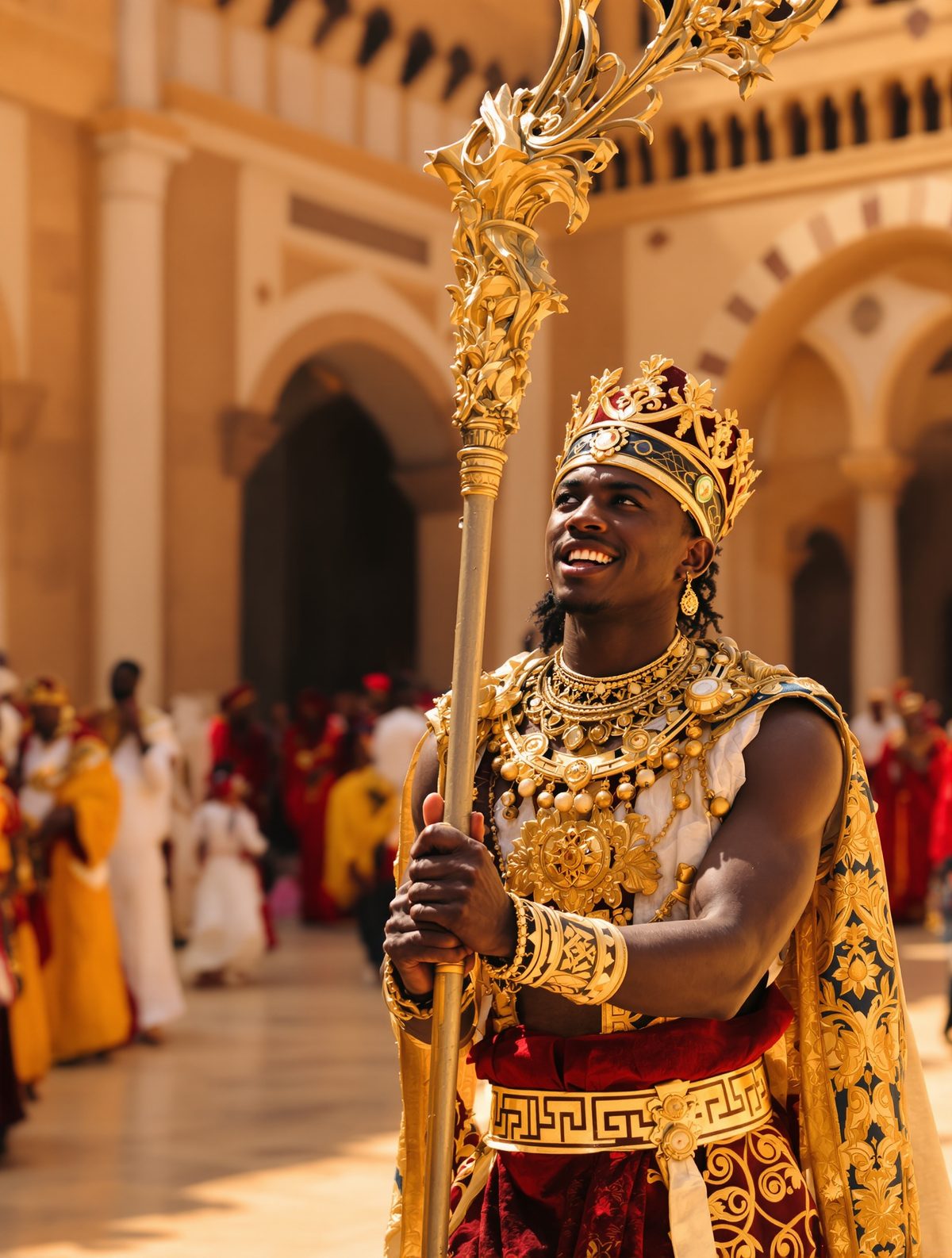
When Marco Polo finally arrived at Kublai Khan's summer palace in Xanadu in 1275, he entered a world that defied every assumption about civilization his Venetian upbringing had taught him. The Mongol Empire stretched from Eastern Europe to the Pacific Ocean – the largest contiguous land empire in human history, encompassing roughly 22% of the Earth's total land area.
Kublai Khan, grandson of the legendary Genghis Khan, had transformed from a nomadic warrior-ruler into the sophisticated emperor of China. His court was a cosmopolitan melting pot where Persian administrators, Chinese scholars, Arab merchants, and now three Venetians mixed freely. The Khan took an immediate liking to young Marco, impressed by his quick wit and linguistic abilities.
Here's what most people don't know: Marco Polo became something like a medieval diplomat-spy for Kublai Khan. The emperor sent him on fact-finding missions across his vast empire, tasks that would take him from the tropical jungles of Southeast Asia to the frozen steppes of Siberia. For nearly two decades, Marco served as the Khan's eyes and ears, witnessing the inner workings of a civilization that was, in many ways, centuries ahead of Europe.
He observed paper money – something that wouldn't appear in Europe for another 200 years. He marveled at coal being burned for fuel, a practice virtually unknown in the West. He witnessed postal systems, government bureaucracies, and engineering projects that dwarfed anything in medieval Europe. The Khan's palace featured rooms cooled by ice in summer and gardens that bloomed year-round thanks to innovative irrigation systems.
The Journey Home: From Riches to Ridicule
By 1292, the Polos had grown wealthy beyond measure, but they were essentially prisoners of their own success. Kublai Khan valued Marco too highly to let him leave. Their escape came through tragedy: when the Khan's great-niece needed safe passage to Persia for an arranged marriage, she specifically requested the Venetians as escorts, trusting their maritime expertise.
The return journey was a nightmare that lasted three years. Of the 600 people who began the voyage, only 18 survived. They sailed through monsoons in the South China Sea, battled pirates in the Indian Ocean, and contracted diseases that turned their skin yellow and their hair white. When they finally stumbled into Venice in 1295, their own family didn't recognize them.
But recognition was the least of their problems. When Marco began telling his stories, Venice reacted with a mixture of fascination and disbelief. He spoke of cities with millions of inhabitants – impossible, since all of Europe contained perhaps 60 million people. He described bridges that could accommodate ten horsemen riding abreast, buildings that scraped the sky, and machines that could print entire books.
The nickname "Il Milione" wasn't meant as a compliment. Venetians used it to mock his allegedly endless fabrications. Even his detailed descriptions of spices, precious stones, and trade goods – the very currency of Venetian commerce – were met with skepticism.
The Book That Changed History
Marco might have taken his stories to the grave if not for a stroke of bad luck that became literary gold. In 1298, during a naval battle between Venice and Genoa, Marco was captured and imprisoned. His cellmate was a romance writer named Rustichello of Pisa, who immediately recognized the storytelling potential of Marco's experiences.
Together, they crafted "Il Milione" (known in English as "The Travels of Marco Polo"), dictated in French – the international language of literature at the time. The book was an immediate sensation, copied by hand and spreading across Europe faster than any bestseller. But popularity didn't equal credibility.
Critics pounced on apparent omissions in Marco's account. Why didn't he mention the Great Wall of China? (Scholars now believe it wasn't yet the massive structure we know today.) Why no mention of tea, chopsticks, or foot-binding? (These weren't yet widespread or might not have seemed noteworthy to a medieval traveler.) Why did some of his place names seem garbled? (He was likely translating through multiple languages – Mongolian, Persian, and Arabic.)
What the skeptics missed was the revolutionary accuracy of his geographical descriptions, his precise accounts of trade routes, and his detailed observations of customs and governance. Modern archaeology and historical research have vindicated almost every major claim in his book.
The Deathbed Defense: "I Have Not Told Half"
As Marco lay dying in January 1324, the weight of a lifetime's disbelief pressed down on him. Friends, family, and clergy gathered for what they assumed would be his final confession – surely, facing eternity, he would admit to the exaggerations that had made him famous.
Father Benedetto, his confessor, reportedly leaned close and whispered, "Marco, you've lived a good life, but these tales of the East... surely you can set the record straight before you meet God?"
Other accounts suggest his dying words were even more emphatic: "I have not told the half of what I saw, because no one would have believed me." Think about that for a moment – a man who had been called a liar for nearly three decades was claiming he had actually understated the wonders he'd witnessed.
What could he have held back? Perhaps he'd seen gunpowder weapons that wouldn't appear in Europe for decades. Maybe he'd witnessed scientific innovations or cultural practices so foreign to medieval European thinking that he knew they would destroy any credibility his book might have. We'll never know what stories died with him that winter day.
The Explorer's Vindication: Why Marco Polo's "Lies" Matter Today
History has been remarkably kind to Marco Polo's reputation. Nearly every aspect of his account that seemed impossible to 14th-century Europeans has been confirmed by modern scholarship. Archaeological evidence supports his descriptions of Yuan dynasty China, his trade route details have proven invaluable to historians, and even his "exaggerated" population figures were remarkably accurate.
But Marco Polo's real legacy isn't geographical – it's psychological. He represents something profoundly human: the courage to bear witness to truth even when that truth seems impossible to others. In our age of instant global communication and satellite imagery, it's hard to imagine how alien and threatening Marco's stories must have seemed to medieval Europeans.
His refusal to recant on his deathbed speaks to a deeper truth about human progress. Every great leap forward in understanding – whether it's Galileo's telescopes, Darwin's evolution, or Einstein's relativity – has been met with disbelief, mockery, and demands for retraction. Marco Polo's dying words remind us that sometimes the most important truths are the ones that sound too extraordinary to believe.
Today, as we debate the credibility of information in our digital age, Marco Polo's story offers a timeless lesson: truth doesn't become false simply because it challenges our assumptions about what's possible. Sometimes the most incredible stories are incredible precisely because they're true.