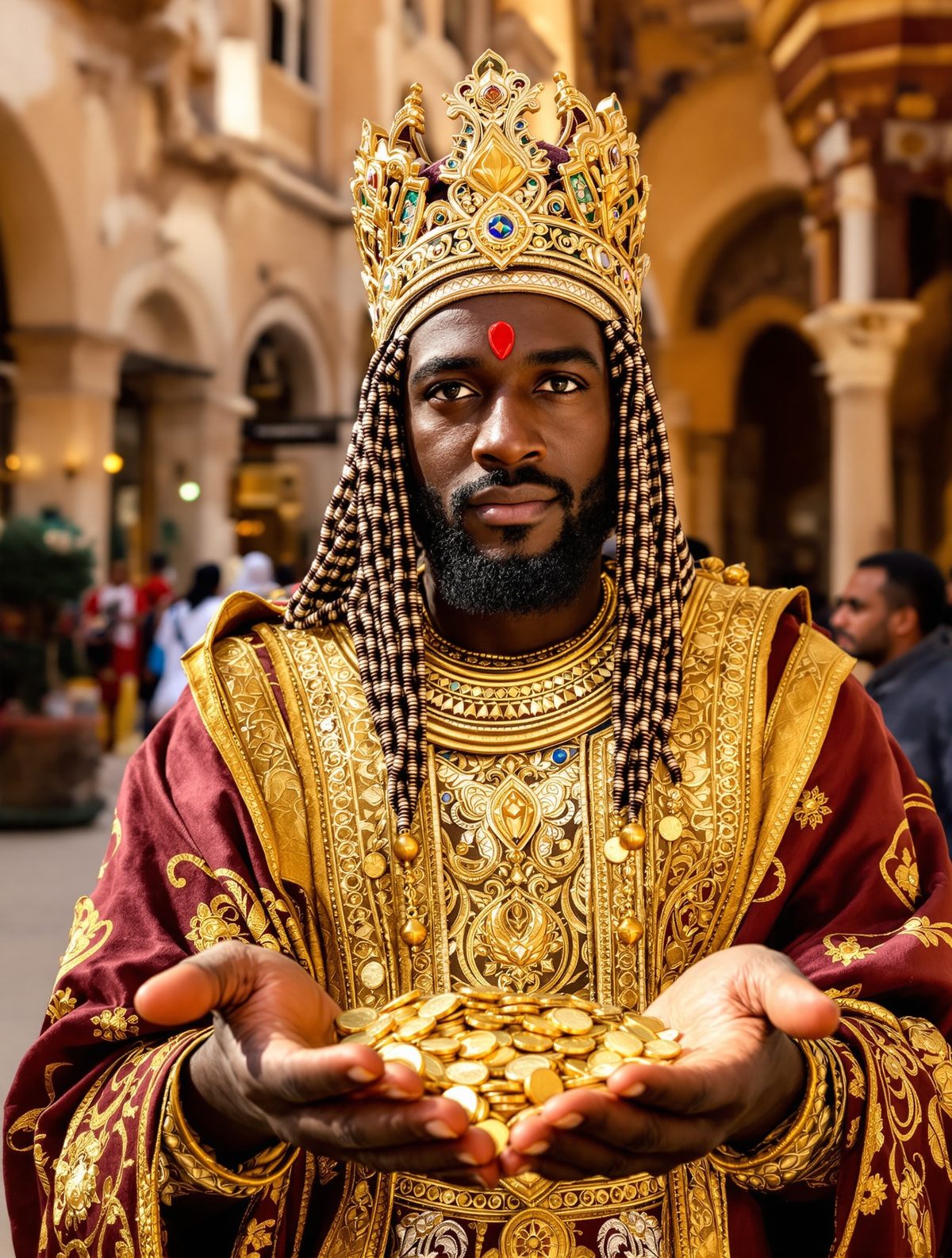
Picture this: A man so wealthy that his casual generosity destroys an entire nation's economy for a decade. In 1324, Egyptian merchants watched in bewilderment as their gold—the foundation of their monetary system—became as worthless as sand. The culprit? A West African king whose pocket change contained more precious metal than most European kingdoms possessed in their entire treasuries.
This wasn't economic warfare or political manipulation. This was Mansa Musa of Mali, a devout Muslim on his way to Mecca, who quite literally gave away so much gold that he accidentally broke Egypt's financial system. It's a story that reveals just how spectacularly wealthy medieval Africa truly was—and how one man's religious devotion created economic chaos across the Islamic world.
The Golden Emperor of a Forgotten Empire
When Mansa Musa ascended to the throne of Mali around 1312, he inherited what was arguably the richest empire on Earth. Stretching across West Africa from the Atlantic coast to the bend of the Niger River, Mali controlled the world's most productive gold mines in Bambuk and Bure. But gold wasn't Mali's only treasure—the empire also dominated the salt trade, and in medieval Africa, salt was literally worth its weight in gold.
Musa's realm was vast beyond European comprehension. At its peak, the Mali Empire covered roughly 1.29 million square kilometers—larger than the entire Holy Roman Empire. Cities like Timbuktu and Gao weren't the backwater settlements that colonial propaganda would later portray, but thriving cosmopolitan centers of learning, trade, and culture. The University of Sankore in Timbuktu housed over 25,000 students and boasted a library containing nearly one million manuscripts.
But here's what medieval Europeans didn't understand: Mali's wealth came from a sophisticated economic system that had been operating for centuries. The empire sat at the crossroads of major trans-Saharan trade routes, collecting taxes from merchants carrying everything from ivory and slaves to kola nuts and precious metals. Mansa Musa didn't just stumble upon wealth—he was the CEO of medieval Africa's most successful multinational corporation.
The Journey That Changed History
In 1324, Mansa Musa made a decision that would echo through history: he would fulfill his religious obligation to perform the hajj pilgrimage to Mecca. What followed was perhaps the most extravagant road trip in human history. This wasn't a simple spiritual journey—it was a moving exhibition of African wealth that would reshape how the Islamic world viewed sub-Saharan Africa.
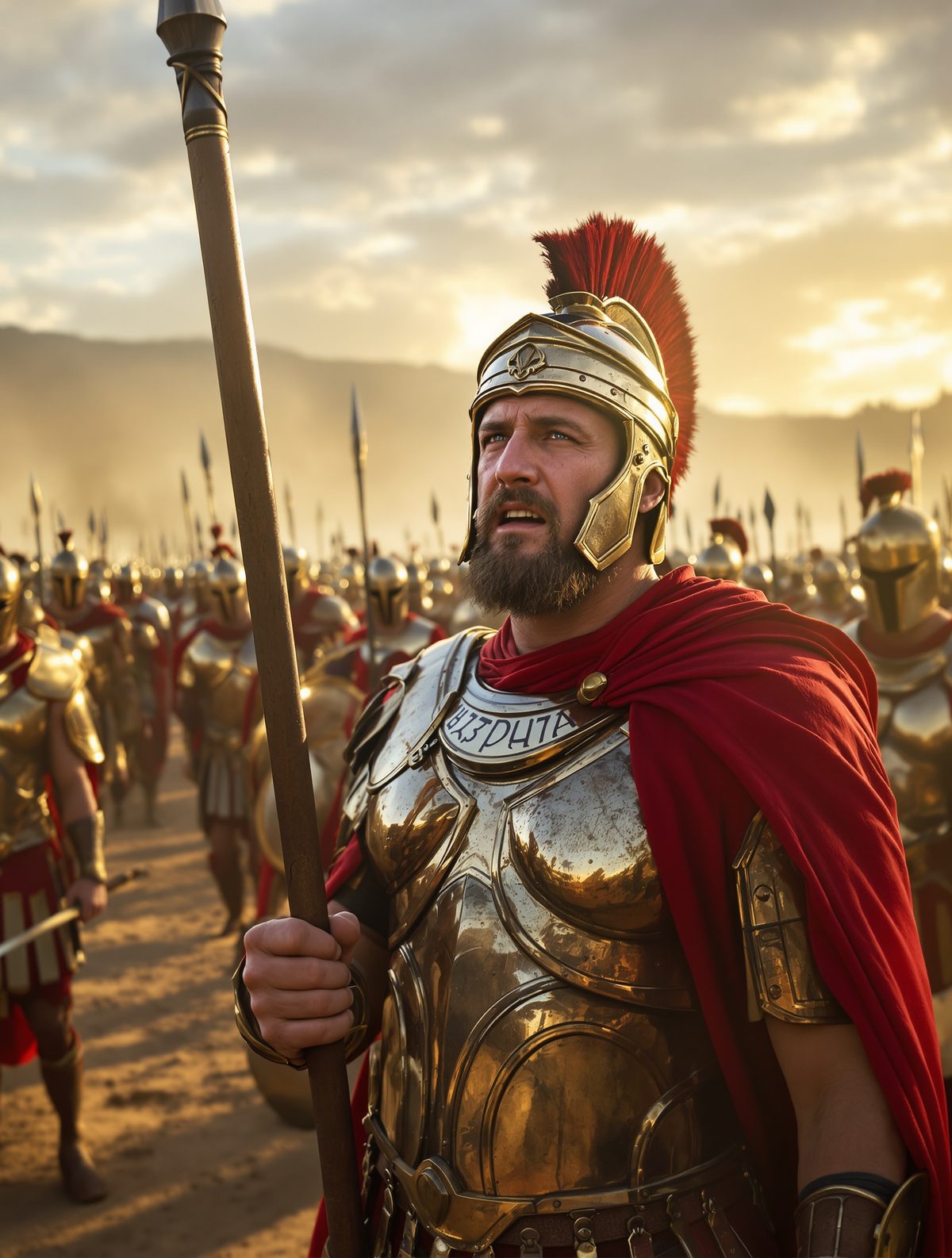
The scale of Musa's caravan defied belief. Contemporary accounts describe a procession of 60,000 people, including 12,000 personal servants dressed in silk and brocade. But the real showstopper was the gold. Musa traveled with 80 camels, each carrying 300 pounds of gold dust. That's roughly 12 tons of gold—worth approximately $400 million in today's currency, and that was just his walking-around money.
The caravan stretched for miles across the Sahara Desert. Five hundred servants each carried a staff of solid gold weighing over six pounds. Musa himself rode in the center of this golden parade, dispensing wealth to anyone who approached. He wasn't showing off—in Islamic tradition, giving alms to the poor is one of the five pillars of faith. Musa was simply practicing his religion on an imperial scale.
Cairo: Where Generosity Became Economic Warfare
When this golden tsunami reached Cairo in July 1324, the economic shockwaves began immediately. Cairo wasn't some provincial outpost—it was one of the wealthiest cities in the Islamic world, the capital of the Mamluk Sultanate, and a crucial hub for Mediterranean trade. The Egyptians thought they'd seen wealth before. They were wrong.
Al-Umari, a Syrian historian who visited Cairo twelve years after Musa's passage, recorded testimonies that still sound impossible today. According to his sources, Musa gave away so much gold that "the people of Cairo earned incalculable sums." But this wasn't just generous tipping—Musa was fundamentally altering the supply and demand of precious metal across the entire region.
Here's where economics became surreal: Musa didn't just give gold to beggars and religious officials. He purchased everything he could find—food, supplies, souvenirs, anything—and paid in pure gold. Egyptian merchants quickly realized they could charge Musa absolutely anything, and he would pay without negotiation. A simple meal that should cost a few copper coins suddenly commanded payments in gold dust.
The mathematical reality was devastating. In three months, Musa flooded Cairo's market with more gold than the city typically saw in decades. The fundamental principle of supply and demand kicked in with ruthless efficiency: when something becomes too abundant, it loses value. Gold, the foundation of Egypt's monetary system, began trading at a fraction of its previous worth.
The Decade of Devaluation
What happened next reads like a case study in unintended economic consequences. The gold that Musa distributed didn't disappear—it circulated through Egypt's economy like a slow-acting poison. Merchants found themselves holding currency that was worth less each day. International traders who came to Cairo expecting to exchange goods for valuable gold discovered they needed massive quantities to match previous transactions.
The ripple effects spread throughout the region. Syria, which maintained close trade relationships with Egypt, saw its own gold-based transactions disrupted. Mediterranean merchants who relied on Egyptian gold for international trade found their purchasing power dramatically reduced. Some historians argue that Musa's generosity contributed to economic instability as far away as Europe, where Egyptian gold had been a crucial component of international commerce.
But here's the most remarkable part: Musa apparently realized what he had done. On his return journey through Cairo in 1325, contemporary sources claim he tried to borrow back some of the gold he had distributed, paying high interest rates to Egyptian moneylenders. It was history's first recorded attempt at quantitative tightening—a medieval king trying to reverse his own economic stimulus package.
The effort was too little, too late. According to multiple historical sources, gold prices in Egypt didn't recover for ten full years. An entire generation of Egyptian merchants had to adapt to a new economic reality where their most precious commodity had become commonplace.
The Man Behind the Economic Catastrophe
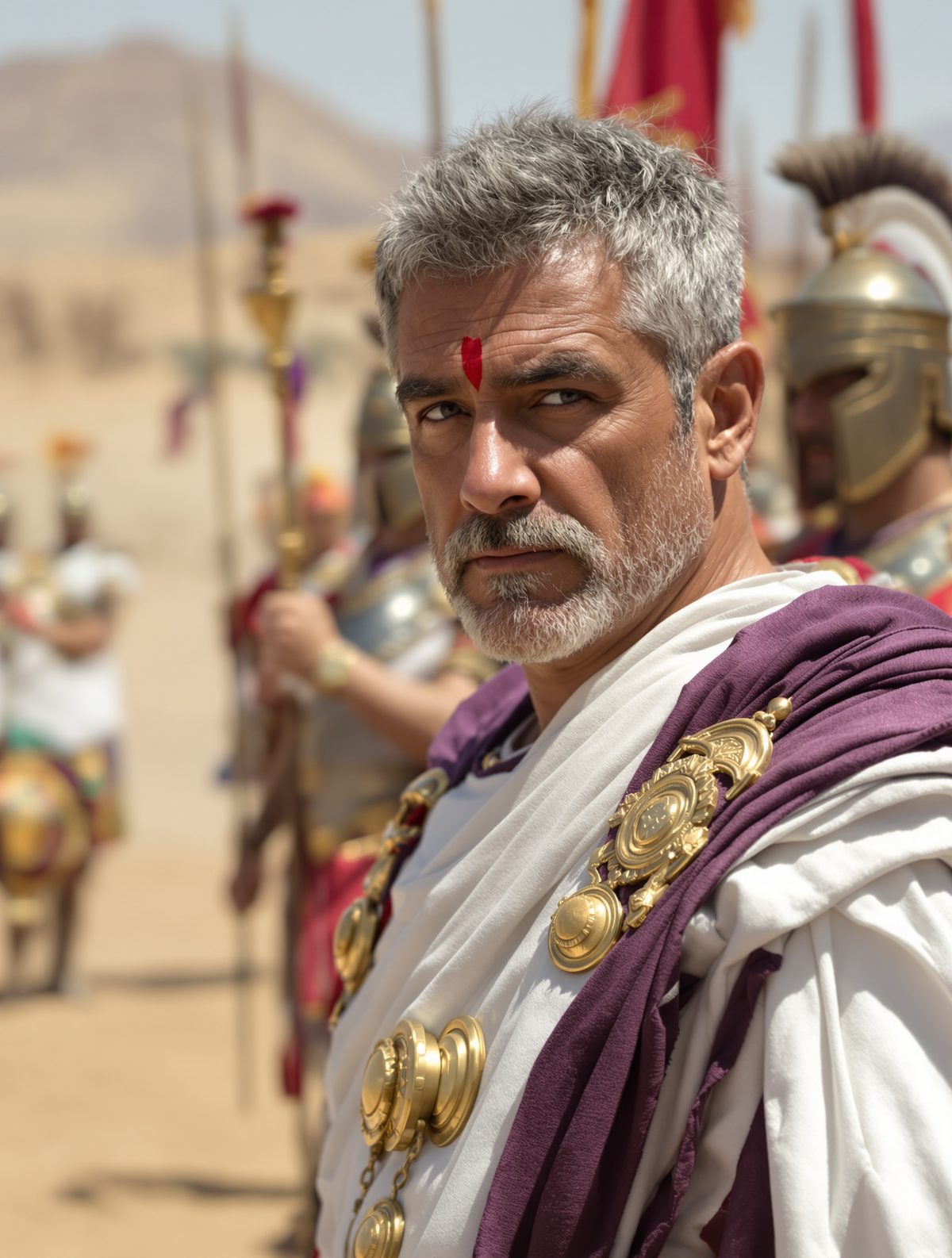
So who was this African king whose generosity accidentally destroyed Egypt's economy? Mansa Musa wasn't just wealthy—he was a sophisticated ruler who understood both politics and economics. During his 25-year reign, he expanded Mali's territory, established diplomatic relationships with North African kingdoms, and created one of medieval Africa's most effective administrative systems.
Musa's pilgrimage wasn't just about personal religious devotion—it was also brilliant marketing. By the time he returned to Mali, every major Islamic kingdom knew about the golden empire in West Africa. Trade relationships that had previously ignored sub-Saharan Africa suddenly became very interested in establishing diplomatic and commercial connections with Mali.
The pilgrimage's impact reached far beyond economics. In 1375, the Catalan Atlas—one of medieval Europe's most important maps—depicted Musa sitting on his throne in West Africa, holding a golden scepter and a massive gold nugget. The caption read: "This Negro lord is called Musa Mali... So abundant is the gold in his country that he is the richest and most noble king in all the land." For medieval Europeans, this was their introduction to African wealth and power.
Why This Story Still Matters
Mansa Musa's economic disruption of Egypt reveals truths that textbooks often ignore. Medieval Africa wasn't the primitive, isolated continent that colonial narratives suggested—it was home to sophisticated empires that could inadvertently destabilize Mediterranean economies through sheer wealth. Mali's gold mines were financing international trade networks that connected West Africa to Europe, Asia, and the Middle East centuries before European colonization.
The story also demonstrates how economic power can be more influential than military might. Musa never invaded Egypt or threatened its rulers, yet his three-month visit had longer-lasting effects than most military campaigns. He achieved what armies couldn't—a complete restructuring of a major economy through pure economic force.
Perhaps most importantly, Musa's journey challenges our assumptions about global wealth and power in the medieval world. While European kingdoms struggled with primitive banking systems and limited precious metal supplies, an African emperor was casually distributing enough gold to crash international markets. It's a reminder that the economic dominance of Europe and North America is a relatively recent historical development, not an inevitable or permanent state of affairs.
In our modern era of global economics and cryptocurrency volatility, there's something almost contemporary about Mansa Musa's story. It shows how quickly markets can shift when new wealth enters the system, and how individual actions—even well-intentioned ones—can have massive, unintended consequences across entire regions. The African king who broke Egypt's economy with kindness remains history's most dramatic example of how generosity, when practiced on an imperial scale, can become its own form of economic warfare.