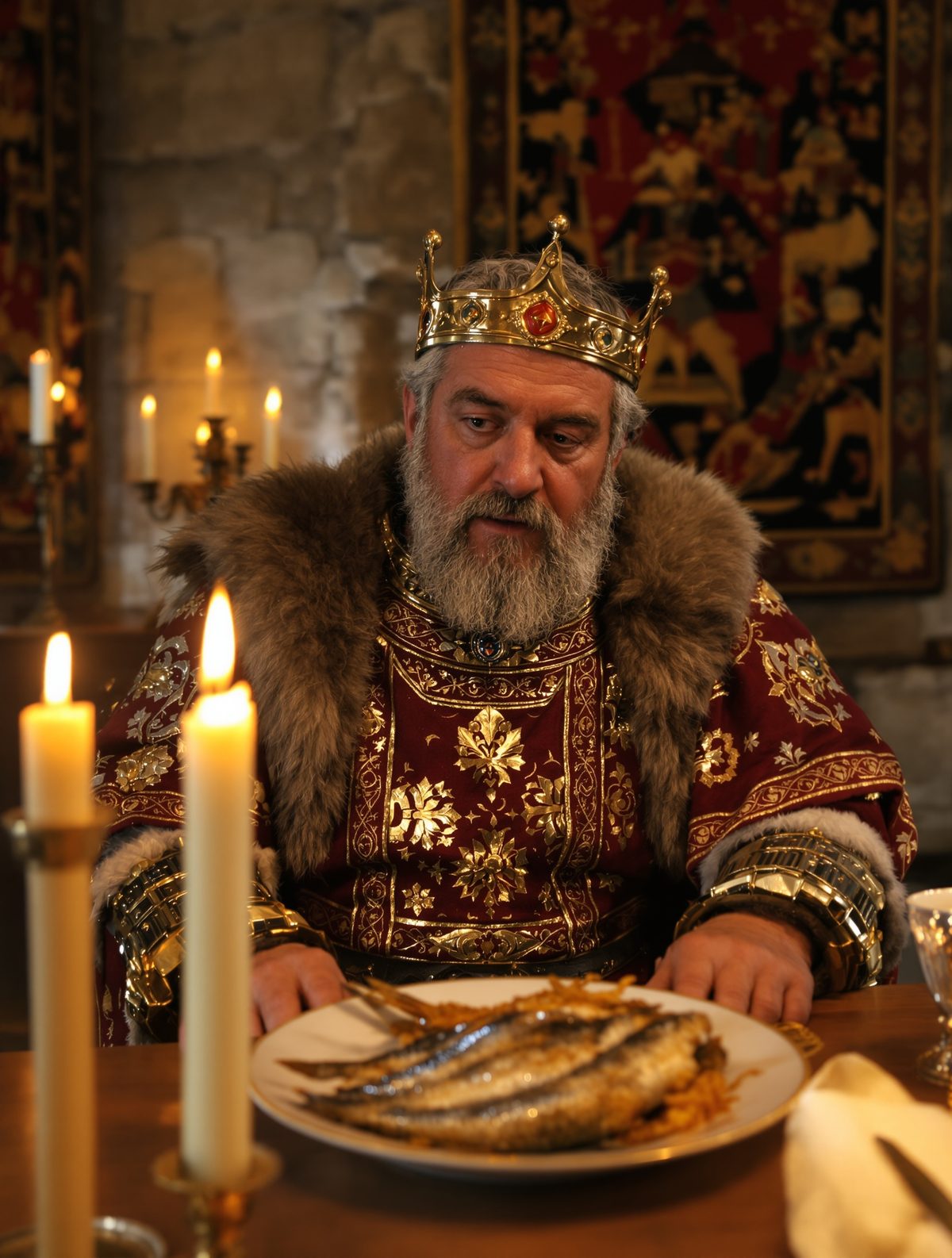
Imagine scrolling through social media and seeing your neighbor air their dirty laundry for all the world to see. Now imagine that embarrassing post surviving for two thousand years, perfectly preserved for future archaeologists to study and snicker at. That's exactly what happened to one Roman baker in Pompeii, whose marital meltdown became history's most enduring example of oversharing.
When Mount Vesuvius erupted on August 24, 79 AD, it didn't just preserve the bodies of Pompeii's residents in volcanic ash—it also captured their most intimate moments, their daily routines, and yes, their domestic drama. Among the countless artifacts and frescoes discovered in the ruins, archaeologists found something that would make even the most seasoned researchers chuckle: a bakery wall covered in what can only be described as ancient Rome's angriest Yelp review, written not by a customer, but by the baker himself.
A Baker's Public Breakdown
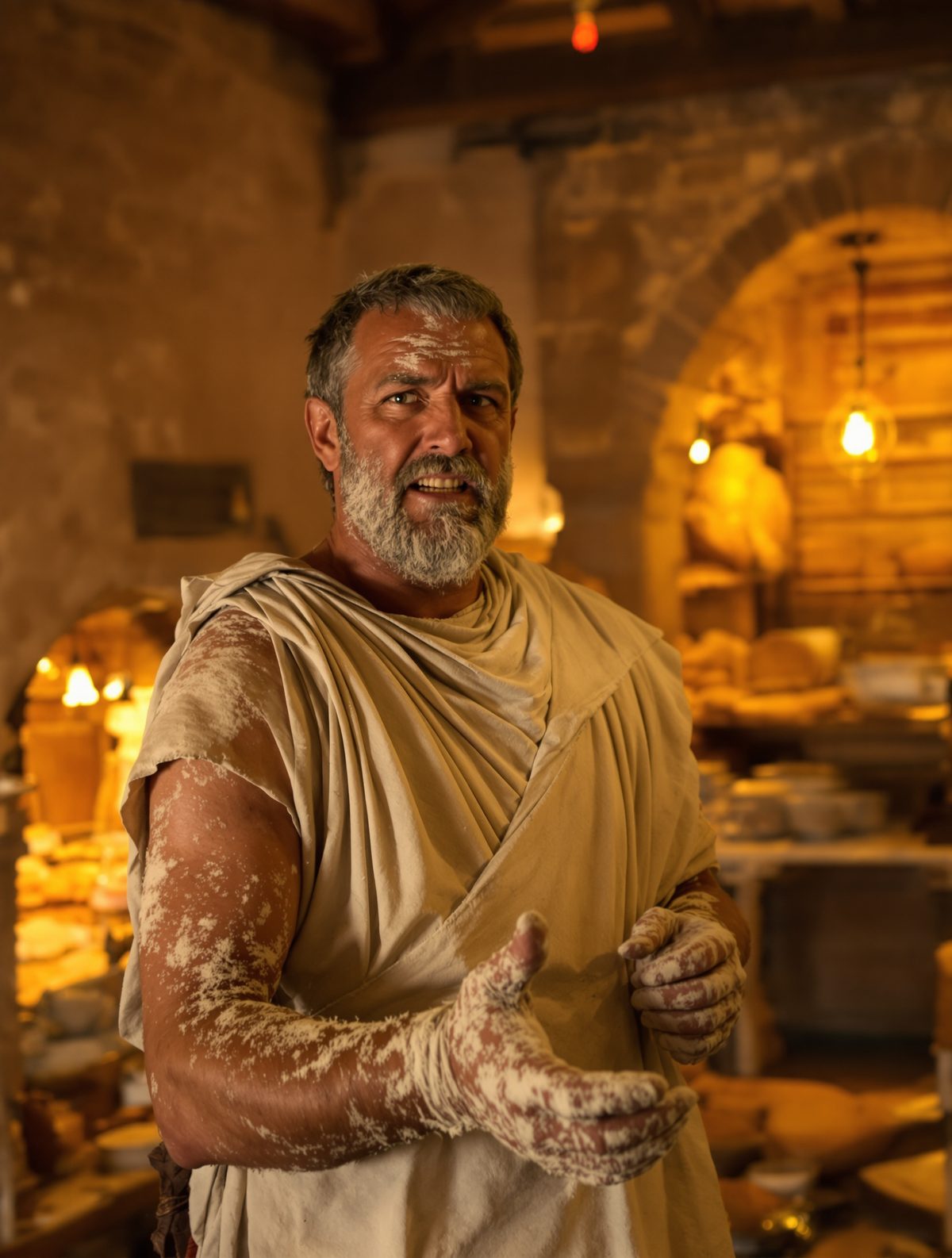
The Pistrina of Modestus, as archaeologists have dubbed it, wasn't just any ordinary Roman bakery. Located on the bustling Via dell'Abbondanza in Pompeii's commercial district, it was a thriving business complete with millstones, ovens, and living quarters above the shop. The bakery's owner, whose name we know from business records as Marcus Modestus, seemed to have it all—a successful enterprise in one of the Roman Empire's most prosperous cities, a steady stream of customers, and a wife named Restituta.
But success in business didn't translate to happiness at home. Sometime before that fateful day in 79 AD, Modestus discovered that his wife was having an affair. Rather than handle the matter privately—perhaps through divorce proceedings or family mediation, as was common among Romans of his social class—Modestus did something that would have made his contemporaries gasp in horror: he grabbed a piece of charcoal and began scrawling his fury across the wall of his own bakery.
The graffiti, preserved in carbonized perfection by volcanic ash, reads in Latin: "Restituta, take off your tunic here and show us your hairy privates!" followed by "Restituta, you have been screwing around behind my back with Romanus. I know all about it, you unfaithful cow!" The angry baker didn't stop there—he continued his public rant across multiple sections of the wall, detailing his wife's alleged infidelities with the kind of explicit language that would make a modern internet troll blush.
When Ancient Romans Went Viral
To understand just how shocking Modestus's public display was, we need to appreciate Roman attitudes toward reputation and dignity. In a society where dignitas—personal honor and reputation—was everything, airing one's private grievances in public was social suicide. Roman men were expected to maintain control over their households, and admitting cuckolding was tantamount to advertising one's failure as a husband and head of family.
Yet Modestus wasn't entirely alone in his public venting. Pompeii was famous throughout the Roman world for its graffiti culture. The city's walls were covered with over 11,000 pieces of ancient street art, ranging from political slogans and gladiator fan clubs to love poems and bathroom humor. Archaeologist Antonio Varone, who spent decades cataloging Pompeii's graffiti, discovered that Romans treated public walls like we treat social media today—as spaces for self-expression, advertisement, and yes, oversharing.
But even by Pompeii's standards, Modestus's marital meltdown was extreme. Most infidelity-related graffiti in the city was written anonymously or targeted public figures. For a business owner to attach his name and address to such personal drama was unprecedented. It would be like a restaurant owner today tattooing complaints about their spouse across their storefront window.
The Science of Preserved Fury
The preservation of Modestus's angry words represents one of archaeology's most remarkable accidents. When Vesuvius erupted, it didn't just spew lava—it released a deadly cocktail of superheated gas, ash, and rock fragments called a pyroclastic flow. This mixture, reaching temperatures of over 1,000 degrees Fahrenheit, killed everything in its path within minutes but also created perfect conditions for preservation.
The volcanic material acted like a natural time capsule, sealing organic materials in an oxygen-free environment that prevented decay. Charcoal-based graffiti, which was already carbon, became even more stable under these conditions. The ash hardened around the text like concrete, protecting it from wind, rain, and the passage of centuries.
When archaeologist Giuseppe Fiorelli's team first uncovered the bakery in 1863, they found Modestus's words exactly as he'd written them, down to the hasty spelling errors and crude drawings that accompanied his text. The preservation was so perfect that researchers could even determine the type of charcoal he'd used—likely scraps from his own ovens—and the approximate time of day he'd written it, based on the angle of the charcoal strokes.
Reading Between the Lines of Ancient Drama
Modern historians have pieced together a fascinating picture of Modestus's life from his angry graffiti and other evidence found in the bakery. Business records show he was relatively prosperous, owning several slaves who operated the mill wheels and managed the ovens. His bakery produced the coarse, dark bread that fed Pompeii's working class, as well as finer white loaves for wealthy customers.
The specific accusations against Restituta suggest the affair had been going on for months, possibly with a customer or business partner named Romanus. Modestus's graffiti includes details that only someone conducting surveillance could know—meeting times, locations, even physical descriptions. This wasn't a crime of passion but a calculated public humiliation campaign.
What makes the story even more intriguing is evidence that Restituta fought back. Additional graffiti in a different hand—possibly hers—appears to respond to her husband's accusations with counter-claims about his own infidelities and business practices. The bakery walls became a battleground for their marriage, a public argument frozen in time by volcanic catastrophe.
The Ultimate Customer Review
In a twisted sense, Modestus's marital rant became exactly what the article title suggests—history's angriest customer review. But instead of complaining about poor service or bad bread, he was reviewing his wife's performance as a spouse, complete with explicit details and a decidedly negative rating. The fact that his "review" survived 2,000 years while millions of others vanished into obscurity gives it a dark immortality he never intended.
The bakery graffiti also reveals how Romans viewed marriage, business, and reputation as interconnected elements of social standing. Modestus wasn't just angry about adultery—he was furious that his wife's behavior threatened his business reputation. Several of his wall rants specifically mention customer gossip and lost business, suggesting that the affair was already common knowledge in their neighborhood.
Archaeological evidence supports this concern. The bakery shows signs of declining business in its final months, with fewer orders for premium bread and reduced slave workforce. Whether this was due to marital scandal or economic factors remains unclear, but Modestus clearly believed his wife's affair was ruining him financially as well as personally.
When Mount Vesuvius erupted that August morning, it ended not just lives but stories mid-sentence. Modestus and Restituta's bodies were never found among the bakery ruins, suggesting they may have fled the city during the initial ash fall, leaving behind their business, their home, and their very public marital battlefield.
Today, visitors to Pompeii can still see remnants of Modestus's angry words, though much of the original graffiti has been moved to climate-controlled storage for preservation. His bakery stands as a testament to a universal truth: technology changes, empires rise and fall, but human drama remains remarkably consistent. Whether carved in volcanic ash or posted on social media, our need to share our pain, anger, and embarrassment with the world transcends centuries.
In our age of viral posts and permanent digital records, Modestus serves as both a cautionary tale and an oddly comforting reminder. His momentary decision to publicize his private pain created an eternal record of his worst day—but it also made him immortal in a way he never expected. Two thousand years later, we're still reading his story, still shaking our heads at his poor judgment, and still recognizing ourselves in his very human desire to make sure everyone knew he'd been wronged.