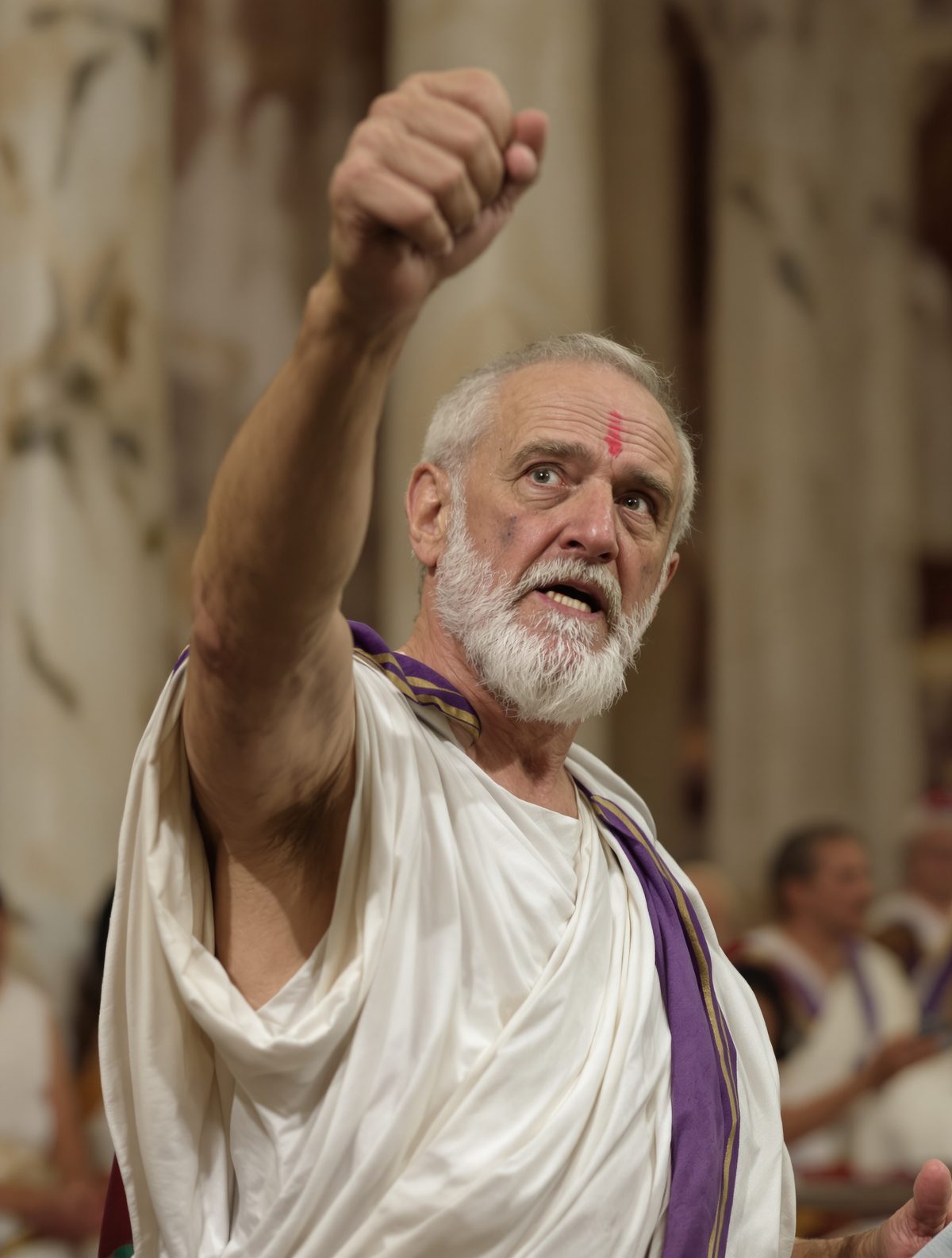
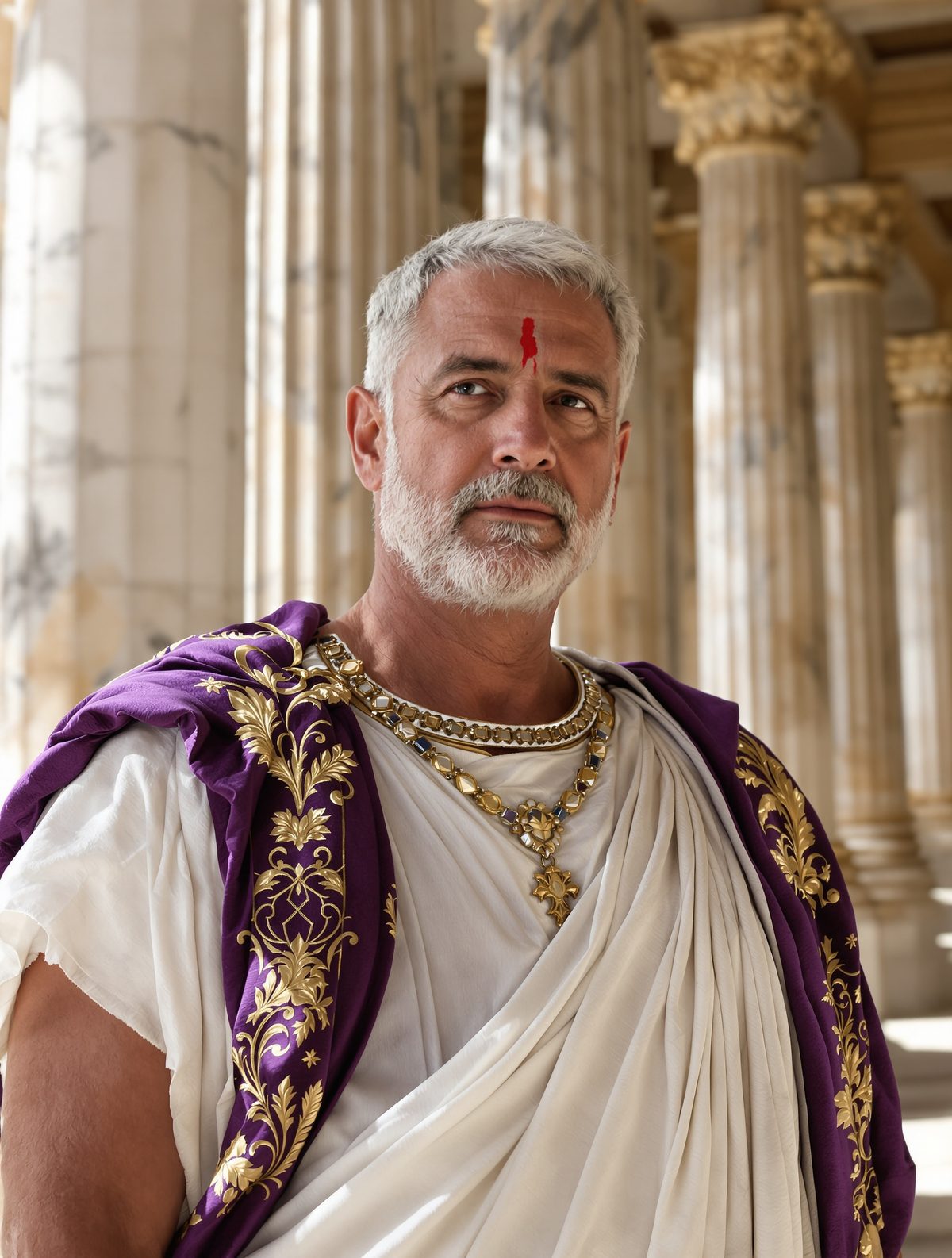
Picture this: A young Roman senator stands before the marble columns of the Forum, his toga pristine white, his speech eloquent and commanding. To the crowds, Gaius Scribonius Curio appears to be the embodiment of Roman nobility. But behind closed doors, he's desperately scribbling IOUs to cover gambling debts that could fund entire military campaigns. In 50 BC, this man would become the most expensive political purchase in Roman history—and his betrayal would light the fuse that exploded the Roman Republic into civil war.
What price would you pay to buy a senator? Julius Caesar discovered the answer was exactly 60 million denarii—enough silver to pay 20,000 soldiers for an entire year.
The Golden Boy Gone Wrong
Gaius Scribonius Curio the Younger was born into everything Rome had to offer. His father, Curio the Elder, had been consul and one of the republic's most celebrated orators. The family villa overlooked the Bay of Naples, adorned with Greek sculptures and Egyptian tapestries that proclaimed their wealth to the world. Young Curio inherited not just fortune, but also his father's silver tongue and magnetic charisma.
Yet by his early thirties, Curio had managed to squander an inheritance that rivaled the treasuries of entire provinces. Roman high society was a vicious playground of excess, and Curio played harder than most. He threw lavish dinner parties where guests reclined on couches inlaid with ivory while exotic animals from Africa prowled between the tables for entertainment. His gambling addiction was legendary even by Roman standards—senators would whisper that Curio once bet and lost a villa in a single dice game.
The most shocking detail? Curio owed money to everyone. Moneylenders, fellow senators, foreign kings, temple treasuries—his debts spider-webbed across the Mediterranean world. Ancient sources suggest his total debts exceeded 60 million denarii, a sum so astronomical that it represented more than the annual tax revenue of wealthy provinces like Asia or Syria.
The Fiercest Critic Money Could Buy
Ironically, Curio's financial desperation made him one of Julius Caesar's most vocal opponents in the Senate. Throughout 59 and 58 BC, as Caesar conquered Gaul and accumulated unprecedented power, Curio's voice rang out in the Forum demanding Caesar's recall and prosecution. His speeches were masterpieces of Roman rhetoric, painting Caesar as a tyrant-in-waiting who threatened the very foundations of the Republic.
But Caesar, the master strategist who had outmaneuvered Germanic tribes and Gallic chieftains, recognized an opportunity when he saw one. While Pompey and the conservative senators viewed Curio as an ally, Caesar saw something else entirely: a desperate man whose loyalty could be purchased.
In the winter of 51-50 BC, Caesar's agents approached Curio with an offer that must have felt like salvation itself. Caesar would pay off every single debt—all 60 million denarii—in exchange for Curio's political support. To put this in perspective, Caesar essentially bought Curio for the equivalent of building 60 miles of Roman road or constructing an entire aqueduct.
The Greatest Political Flip-Flop in History
What happened next would have made modern political consultants weep with envy. Curio didn't just switch sides—he became Caesar's most effective weapon in the Senate, wielding his inherited oratory skills like a gladius thrust into the heart of the opposition.
When Curio took office as tribune of the plebs in December 50 BC, his transformation was complete. The man who had spent years demanding Caesar's head now stood before the same senators and delivered passionate speeches defending Caesar's right to stand for consul in absentia—without returning to Rome and surrendering his military command.
But Curio's masterstroke came with a proposal so clever it nearly prevented civil war entirely. In a packed Senate session, he stood and made what seemed like a reasonable compromise: both Caesar and Pompey should dismiss their armies simultaneously and return to Rome as private citizens. The proposal was brilliant political theater—Curio appeared to be the voice of moderation, seeking peace between the two most powerful men in Rome.
The Senate erupted in debate. Here was a solution that seemed fair to everyone, proposed by a senator known for his integrity and eloquence. When the vote was called, 370 senators voted in favor, with only 22 against. It was an overwhelming mandate for peace.
The Vote That Broke an Empire
But the conservative faction, led by Consul Marcus Claudius Marcellus, smelled a trap. They recognized that Curio's proposal, while seemingly even-handed, actually favored Caesar. Pompey's power rested on his command of armies near Rome; Caesar's lay in his conquests and wealth from Gaul. In a political contest on equal terms, Caesar would have significant advantages.
Marcellus refused to accept the Senate's vote, declaring it invalid. In one of history's most consequential acts of political obstruction, he overruled the clear will of the Senate. The moment that could have preserved the Roman Republic—a compromise that 94% of senators supported—died in partisan politics.
Curio, playing his role to perfection, dramatically fled Rome and raced north to Caesar's winter quarters in Ravenna. There, he delivered the news that would change history: the Senate had voted for peace, but the consuls had chosen war.
Caesar, according to Plutarch, received Curio's report while playing dice—a fitting detail, given that both men were gamblers by nature. After hearing how his 60-million-denarii investment had nearly purchased peace itself, Caesar made his famous decision. On January 10, 49 BC, he led a single legion across the Rubicon River, speaking the words that would echo through history: Alea iacta est—the die is cast.
The Price of Loyalty
Curio's story didn't end with Caesar's march on Rome. As civil war engulfed the Mediterranean, Caesar rewarded his expensive ally with a military command in North Africa. But the young senator who had proven so effective at manipulating Roman politics proved less adept at Roman warfare.
In 49 BC, Curio led an expedition against the Pompeian forces in modern-day Tunisia. Despite initial successes, he was outmaneuvered by King Juba of Numidia and killed in battle along with most of his army. Caesar reportedly wept when he received news of Curio's death—whether from genuine grief or disappointment at losing such a valuable asset, we'll never know.
When Democracy Has a Price Tag
The tale of Gaius Scribonius Curio offers a chilling glimpse into how personal debt can corrupt democratic institutions. A man drowning in gambling debts became the pivotal figure in the collapse of the Roman Republic—not through ideology or principle, but through simple financial desperation.
Caesar's purchase of Curio represents more than just ancient political corruption; it reveals how economic leverage can undermine democratic decision-making. In our modern era of campaign contributions, lobbying, and political debt, Curio's story feels uncomfortably familiar. How many contemporary political "flip-flops" might have price tags attached? How many votes in our own legislatures might be influenced by financial pressures invisible to the public eye?
The Roman Republic's death certificate might well have been written in Caesar's checkbook, signed with Curio's name, and sealed with the blood of civil war. It stands as an eternal warning: when senators are for sale, democracy itself goes on the auction block.